

Education in India is changing faster than ever before. From small towns to big metro cities, students are now learning with the help of smart technology. The growth of AI in education India is not just a trend; it is a real shift in how children study, how teachers teach, and how parents support learning at home. Artificial intelligence tools can explain a difficult maths problem in simple words, create practice questions in seconds, and even help a student revise at midnight before an exam.
For many families, this change brings hope. A student in a remote village can now access the same quality of guidance that was earlier available only in expensive city institutes. A teacher handling sixty students in one classroom can use AI tools to check homework faster and give personal attention to those who need it most. In this article, we will see how AI is transforming classrooms, homes, and exam preparation across the country, and how students, parents, and teachers can use it wisely.
How AI Is Changing the Way Students Learn
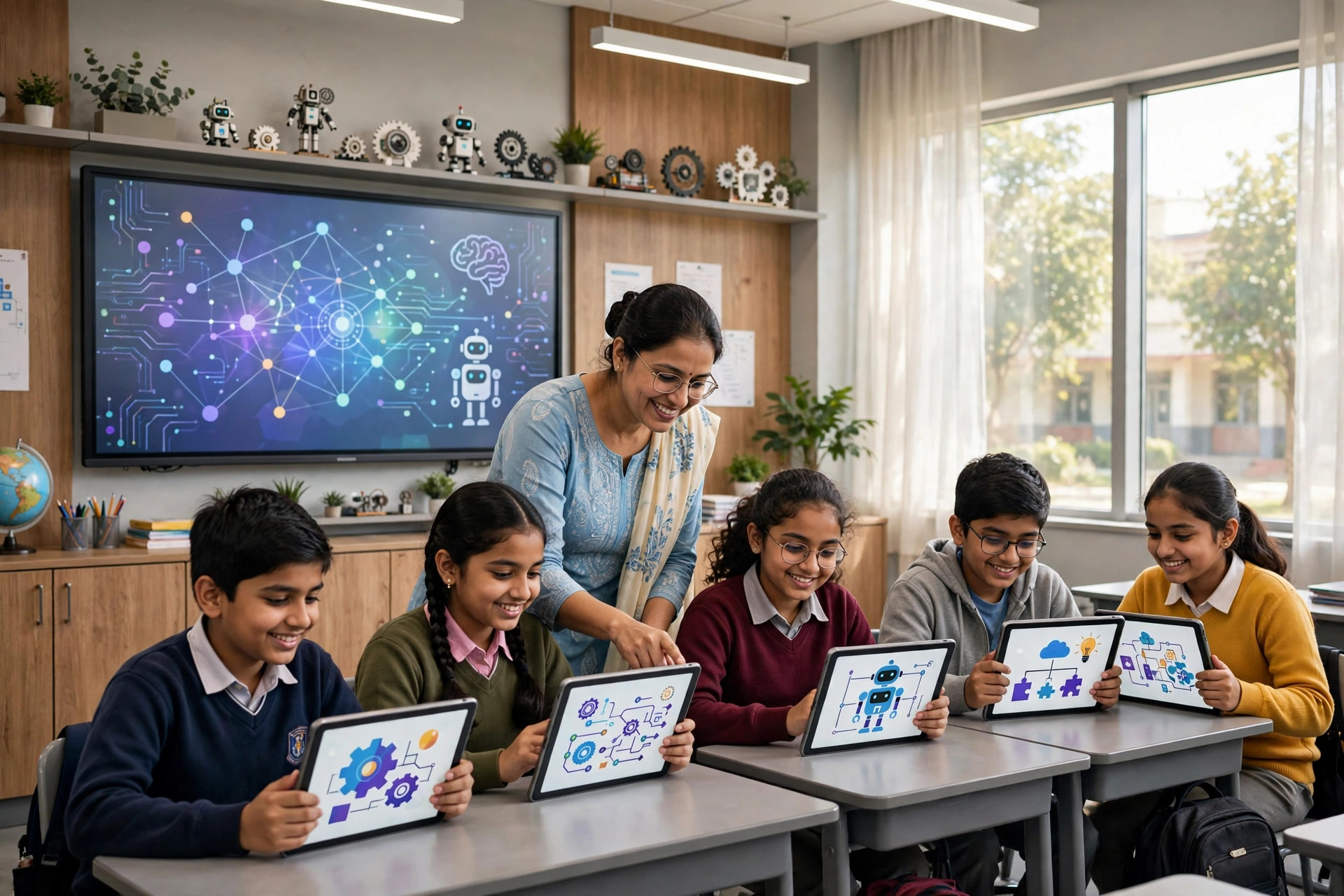
The biggest strength of artificial intelligence is personalisation. Every student learns at a different speed. Some understand algebra quickly but struggle with grammar, while others read well but fear science. Earlier, one teacher had to follow a single pace for the whole class. AI-based learning apps change this by adjusting lessons according to each student’s level. If a learner answers questions correctly, the app moves to harder topics. If the learner makes mistakes, the app repeats the concept with easier examples and extra practice.
Learning at Your Own Speed
With AI tools, there is no embarrassment in asking the same question five times. Students can pause a video lesson, replay a difficult part, or ask a chatbot to explain a concept in Hindi or another regional language. This freedom reduces fear and builds confidence, especially for shy students who hesitate to raise their hand in class. Slowly, learning becomes a habit rather than a burden, and students start enjoying subjects they once disliked.
Instant Doubt Solving
Earlier, a doubt that came at night stayed unsolved until the next day, and often it was forgotten. Now, AI doubt-solving apps give step-by-step answers within seconds. A student preparing for board exams can click a photo of a question and receive a clear explanation. This instant support keeps motivation high and makes daily revision more effective.
AI as a Helping Hand for Teachers
Many people worry that AI will replace teachers. In reality, the opposite is happening in Indian schools. AI is removing the heavy, repetitive work from a teacher’s day so that teachers can focus on what machines cannot do: guiding, motivating, and understanding students emotionally.
Less Paperwork, More Teaching
Teachers spend hours preparing question papers, checking copies, and maintaining records. AI tools can generate quizzes, evaluate objective answers, and prepare progress reports automatically. This saves several hours every week. Teachers can use this time to plan better lessons, hold discussions, and support weak students personally.
Understanding Every Student Better
Smart dashboards show teachers exactly where the class is struggling. If most students are making mistakes in one chapter, the teacher knows it needs to be taught again. Parents also receive simple reports about their child’s progress, strengths, and areas of improvement. This clear communication between school and home was difficult earlier, but AI has made it regular and easy.
Smarter Exam Preparation for Competitive Tests
India’s competitive exams like JEE, NEET, CAT, and GMAT demand strong concepts and regular practice. AI platforms analyse a student’s mock test performance and point out weak chapters with surprising accuracy. Instead of studying everything again, students can focus on the topics that actually need work.
Many aspirants also feel confused about the right study method. Some prefer joining a coaching institute, while others study better at home. Reading a clear comparison of online vs offline coaching choices for CAT and IPMAT can help students decide what suits their routine and budget. AI tools work well in both cases: coaching students use them for extra practice, and self-study students use them as a personal guide.
Success in these exams depends on balance. Expert guidance matters, but so does disciplined self-study. A thoughtful guide on balancing self-study and coaching for GMAT preparation explains this well. When students combine coaching support with AI-powered practice and analysis, their preparation becomes more organised and less stressful.
Benefits of AI in Education for Indian Families
The positive impact of AI is visible in homes across the country. Here are some clear benefits that students, parents, and teachers are already experiencing:
- Affordable learning: Many AI apps cost far less than private tuition, and several offer free basic plans.
- Equal opportunity: Students in small towns get access to quality content once limited to big cities.
- Language support: Lessons and explanations are increasingly available in Hindi and regional languages.
- Better revision: Smart flashcards and quizzes help students remember topics for longer.
- Skill development: Along with school subjects, students can learn coding, communication, and other future skills.
- Parent involvement: Simple progress reports keep parents informed without needing technical knowledge.
Along with these benefits, families today rely on digital platforms for almost every learning need, from finding study material to comparing courses. Exploring smart tech resources for learners shows how technology platforms are making education services simpler and more transparent for students and parents alike.
What Parents Should Keep in Mind
AI is a powerful tool, but it works best with guidance. Parents should ensure that children maintain a healthy study routine, take breaks from screens, and still read books and play outdoors. It is also wise to choose well-reviewed apps, protect personal data, and encourage children to think on their own instead of copying answers blindly. When used with discipline, AI becomes a study partner, not a shortcut.
Conclusion
The rise of AI in Indian education is a positive story of access, quality, and opportunity. It helps students learn at their own pace, supports teachers with smart tools, and gives parents a clear view of progress. Challenges like internet access and screen time are real, but they can be managed with the right habits. For students, the message is simple: use AI to understand concepts deeply, practise regularly, and stay curious. The future of learning in India is bright, and those who adopt these tools early will be better prepared for the exams and careers of tomorrow.