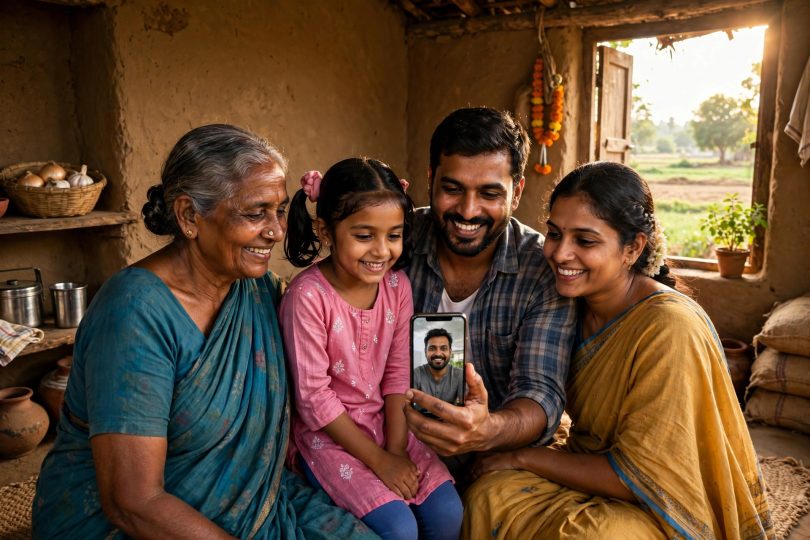

Walk into almost any Indian village today and you will notice a quiet change. A farmer checks mandi prices on his phone before selling his crop. A grandmother speaks to her grandchildren on a video call. A young student attends an online class from her courtyard. Digital India rural technology is no longer a city idea slowly reaching the villages — it is already part of daily rural life, and it is making that life simpler, safer and more hopeful.
Over the last decade, cheaper smartphones, affordable data and better mobile networks have reached deep into rural India. Government services, banking, education and healthcare that once needed a long trip to the district town are now available on a small screen. In this article, we look at how technology is changing rural lives for the better, one village at a time.
Money in Every Pocket: Digital Payments and Banking
For many rural families, the nearest bank branch was once many kilometres away, and keeping cash at home was risky. Today, a basic smartphone and a bank account opened under the Jan Dhan scheme have changed that picture completely. Money sent by a son working in the city reaches his parents in seconds. Farmers receive subsidies and payments directly into their accounts, without any middleman taking a share, and every transaction leaves a clear record.
UPI in the Village Market
The tea stall, the kirana shop and even the vegetable cart in many villages now display a small QR code. Customers scan and pay in seconds, and shopkeepers no longer worry about keeping change or losing cash. Small sellers can also show their digital transaction history when they apply for a loan, which helps them get credit from a bank instead of borrowing at high interest from local lenders.
Banking correspondents and small customer service points have also brought doorstep banking to villages. People can withdraw cash, deposit money and check balances close to home. For elderly citizens, this means no more tiring journeys just to receive a pension.
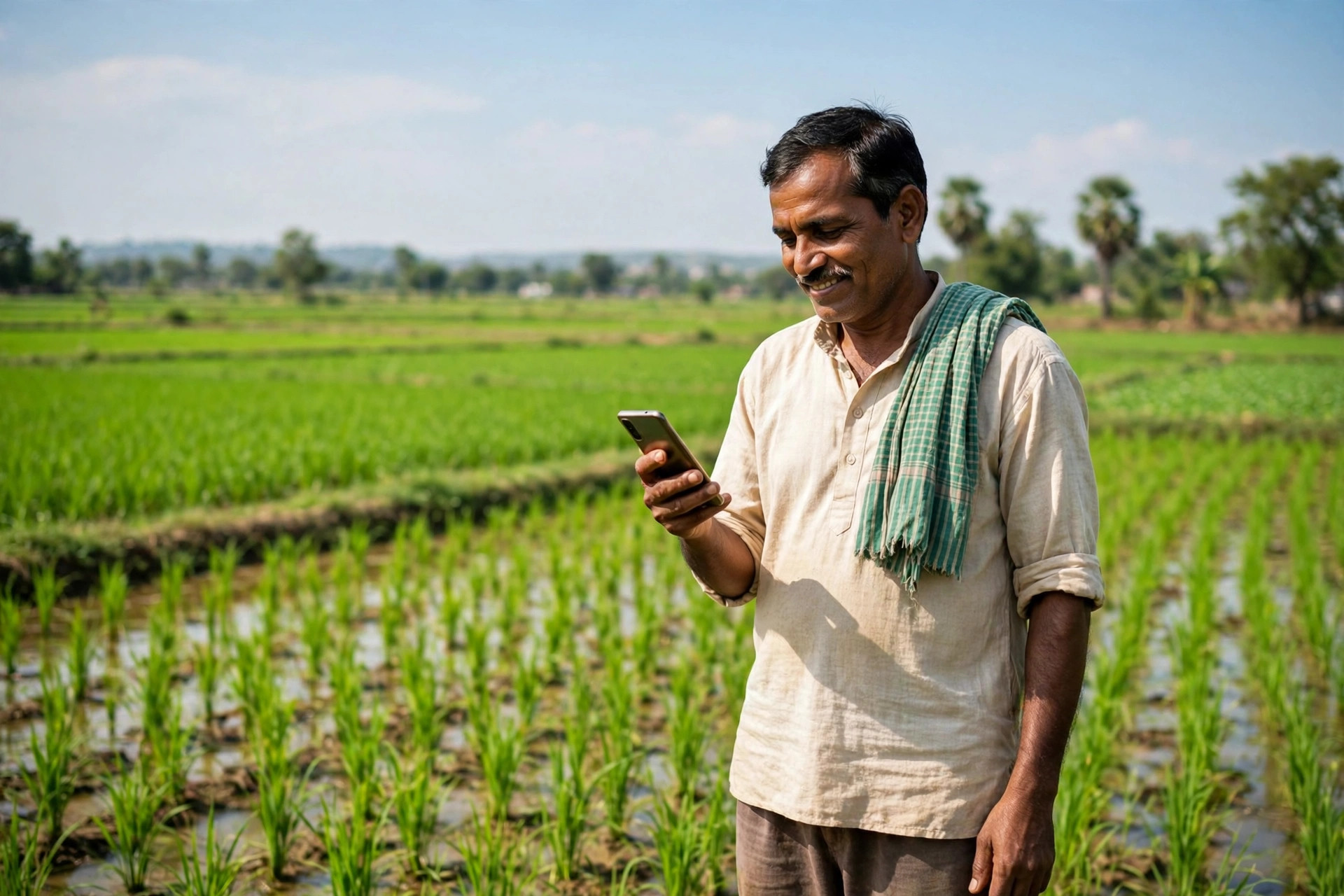
Farmers, too, are seeing real benefits. Weather forecasts on the phone help them plan sowing and harvesting. Market price apps tell them where their produce will get the best rate, so they are no longer forced to sell cheaply to the first buyer who arrives. Some farmers now sell directly to buyers in other states through online platforms, and crop insurance claims and soil health information are easier to access than ever before. For a family whose whole year depends on one harvest, this knowledge is power — it reduces risk, raises income and brings a sense of control that earlier generations never had.
Learning Without Leaving the Village
Education is one of the biggest gifts of the digital age for rural India. Students who once depended only on an overcrowded classroom can now watch recorded lessons, attend live online classes and prepare for competitive exams from home. A girl in a small village can learn computer skills, spoken English or tailoring from free videos, and a farmer’s son can dream of careers that earlier felt out of reach.
Online Classes and Digital Skills
Digital learning platforms, government portals and simple YouTube lessons have made quality teaching available in regional languages. Many village schools now use smart classes and digital boards, which make difficult subjects easier to understand. Young people also use online courses to learn skills like typing, accounting software and mobile repairing, which directly improve their chances of getting a job.
Common Service Centres in villages support this change by offering practical digital services under one roof, such as:
- Online applications for certificates, scholarships and government schemes
- Digital literacy training for students, farmers and senior citizens
- Help with online exam forms, results and admissions
- Printing, scanning and internet access for the whole village
Better Health, Closer to Home
Healthcare has always been a challenge in rural areas, where hospitals are far and specialists are rare. Technology is slowly closing this gap. Through telemedicine services, a patient sitting in a village clinic can consult a doctor in a city hospital over a video call. This saves travel cost, saves time and, in serious cases, can save lives.
Health Records and Awareness
Digital health IDs and online records mean a patient’s history is available wherever they go for treatment. Health workers in villages use mobile apps to record vaccinations, track pregnant mothers and remind families about check-ups. Simple awareness videos in local languages also teach people about hygiene, nutrition and common diseases, which prevents many illnesses before they start.
Even booking an appointment, ordering medicines or getting a lab report is becoming possible from a phone. For families who once spent a full day and a large part of their income on a single hospital visit, this change is truly life-changing.
Women and Communities Growing Stronger
One of the most heartening changes is the way rural women are using technology. Self-help groups manage their accounts on mobile apps, women entrepreneurs sell homemade products through social media and messaging groups, and homemakers learn new skills online. When a woman earns her own income and handles digital money confidently, the whole family’s future becomes more secure. Stories of women empowerment from small villages show how a single smartphone can open the door to respect, income and independence.
Technology is also bringing villagers together in new ways. Farmer groups share weather updates and crop advice instantly, village committees announce schemes and meetings online, and local youth help elders use digital services. These everyday efforts reflect the true spirit of community development basics: local people solving local problems with the tools they have. In many places, this digital connection is quietly supporting wider social reform, because equal access to information gives every citizen, rich or poor, the same chance to grow.
Conclusion: A Digital Future That Includes Every Village
The journey is not complete. Some areas still struggle with weak networks, power cuts and low digital awareness, and older citizens sometimes find new technology confusing. But the direction is clear and positive. With better connectivity, more local-language content and patient training for first-time users, these gaps will keep closing.
Digital India rural technology is proving that progress does not belong only to big cities. When a farmer gets a fair price, a student learns from the best teachers, a patient reaches a doctor in time and a woman builds her own business, technology has done its real job. Rural India is not just connecting to the internet — it is connecting to opportunity, and that is a change worth celebrating.