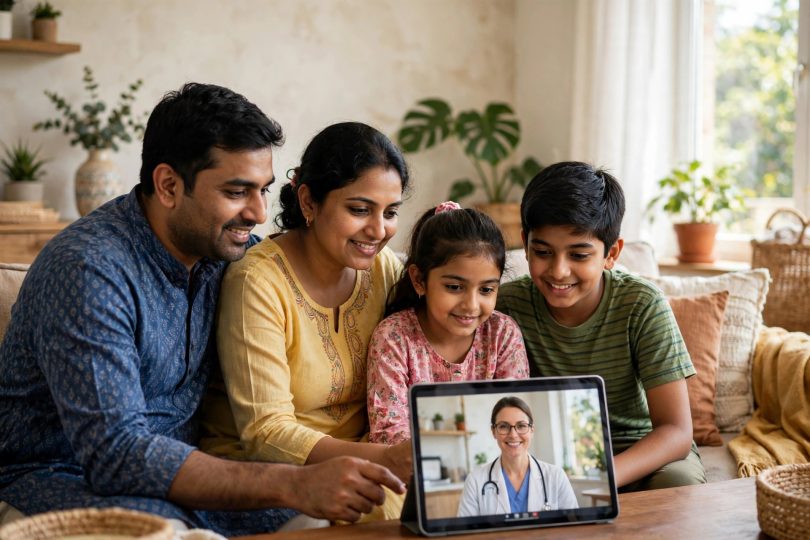

Not long ago, seeing a good doctor often meant a long bus journey, a full day lost from work and hours spent waiting outside a crowded clinic. For millions of families, that experience is now changing, because telemedicine in India allows patients to consult doctors through a simple video or phone call from home. What began as a necessity during the pandemic has grown into a trusted habit: follow-up visits, second opinions and everyday health questions are increasingly handled online. This guide explains how telemedicine works, when it helps the most, what it costs, and how your family can use it safely and confidently.
What Is Telemedicine and How Does a Video Visit Work?
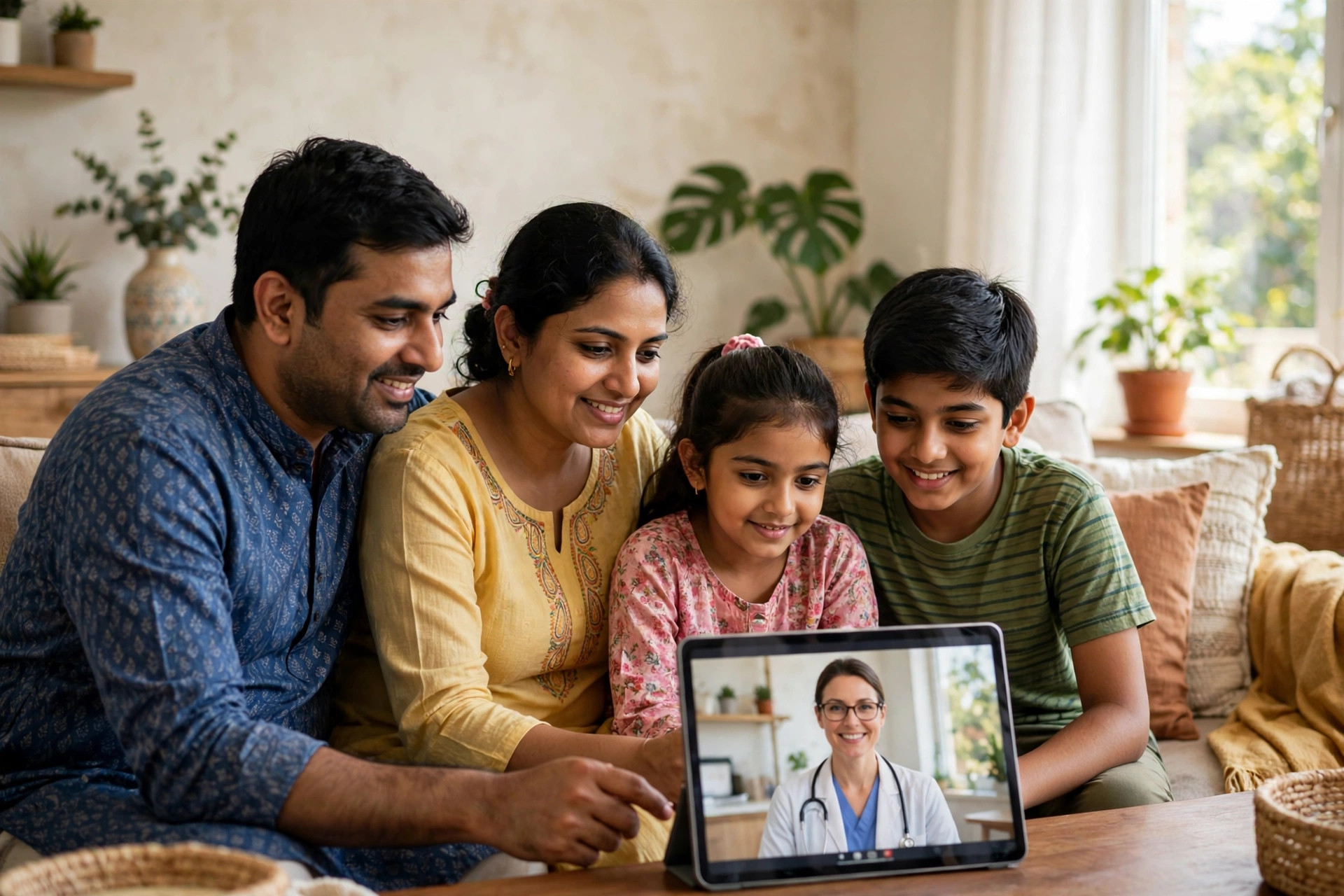
Telemedicine simply means healthcare at a distance. Using a phone app or website, you describe your symptoms, share reports or prescriptions if needed, and speak with a registered doctor by video, voice call or chat. The doctor asks questions, may guide you to check simple things like temperature, and then advises treatment, tests or an in-person visit if the condition needs a physical examination. For many common problems, the consultation ends with an e-prescription that you can use at your local pharmacy.
The process is designed for ordinary people, not technology experts. Most platforms work on a basic smartphone, offer support in multiple Indian languages, and allow a family member to join the call. Payment is usually digital and receipts are stored in the app, which makes follow-ups and medical records easier to manage over time.
Why Telemedicine Matters So Much for Indian Families
India has world-class doctors, but they are concentrated in larger cities. Telemedicine helps bridge that distance in a practical way.
Help for Small Towns and Villages
For a patient in a small town, the nearest specialist may be a hundred kilometres away. An online consultation can confirm whether that journey is really needed or whether treatment can begin locally. This saves money, saves time and, in many cases, starts treatment days earlier. Village health workers also use telemedicine to connect patients with city doctors, turning a small local clinic into a doorway to wider expertise. You can read more about such grassroots change in our Social Impact and Change stories.
Gentle Support for Elderly Parents
Many young Indians work in cities while their parents live back home. Telemedicine in India has quietly become a blessing for such families. Adult children can book appointments, join video calls with their parents and the doctor, and keep track of medicines for conditions like diabetes, blood pressure and thyroid, which need regular review rather than emergency care. For elderly patients, avoiding long travel and crowded waiting rooms is itself a form of comfort and safety.
Mental Health Support Without Stigma
Online consultations have also made mental health care easier to reach. Many people hesitate to visit a counsellor’s clinic in their own neighbourhood, but speaking to a professional privately from home feels safer. Students facing exam stress, young professionals dealing with burnout and homemakers carrying silent worries are increasingly choosing video counselling. This quiet shift matters: when help is one call away and completely confidential, people seek support earlier, and earlier support usually means faster recovery and stronger families.
Problems That Can Be Handled Well Online
Telemedicine works best for consultations, follow-ups and non-emergency problems. Common examples include:
- Fever, cold, cough, allergies and mild stomach problems
- Skin issues, hair fall and acne, where photos help the doctor
- Review of long-term conditions such as diabetes, asthma and blood pressure
- Mental health counselling and stress or sleep concerns
- Second opinions and understanding test reports
- Follow-up visits after surgery or hospital discharge
Emergencies are different. Chest pain, serious injury, breathing difficulty, stroke symptoms or very high fever in infants need immediate hospital care, not a video call. Good telemedicine platforms themselves advise this clearly, and responsible families should treat online care as a smart first step, not a replacement for emergency services.
What You Need and What It Costs
Getting started is simple. You need a smartphone or computer, a reasonably stable internet connection and, ideally, a quiet corner for the call. Keep recent prescriptions, test reports and a list of current medicines ready; a thermometer and a basic blood pressure device at home can make the consultation more accurate. Costs vary by doctor and platform, but many general consultations online are priced similarly to, or lower than, a clinic visit once you count travel and lost wages. Government-backed services and hospital platforms have also expanded access, making telemedicine in India more affordable for ordinary families. For more everyday wellbeing reads, visit our Health section.
Tips for a Smooth Online Doctor Consultation
A little preparation makes an online visit far more effective. Write down your symptoms, when they started and what makes them better or worse. Note your allergies and regular medicines honestly. Choose a well-lit place for video calls, especially for skin problems, and do not hesitate to ask the doctor to repeat or explain anything in simple words. After the call, save the prescription, set reminders for medicines, and note the date suggested for review. If symptoms worsen or do not improve as expected, contact the doctor again or visit a clinic without delay. It also helps to maintain one simple family health folder, digital or physical, where prescriptions, reports and vaccination records are kept in order. During any consultation, online or in person, this small habit saves time, prevents repeated tests and helps every doctor understand your family’s health history at a glance.
Care That Reaches Every Home
The heart-warming truth is that technology feels most meaningful when it protects the people we love. Telemedicine in India is doing exactly that: bringing timely advice to remote villages, comfort to elderly parents and clarity to worried families, all through a small screen. Used wisely, alongside regular check-ups and emergency care when needed, it makes India’s healthcare story more equal and more hopeful. Share this guide with your family group today; the next time someone falls ill, a good doctor may be only one video call away. For more positive and useful stories, keep reading Optimist India.