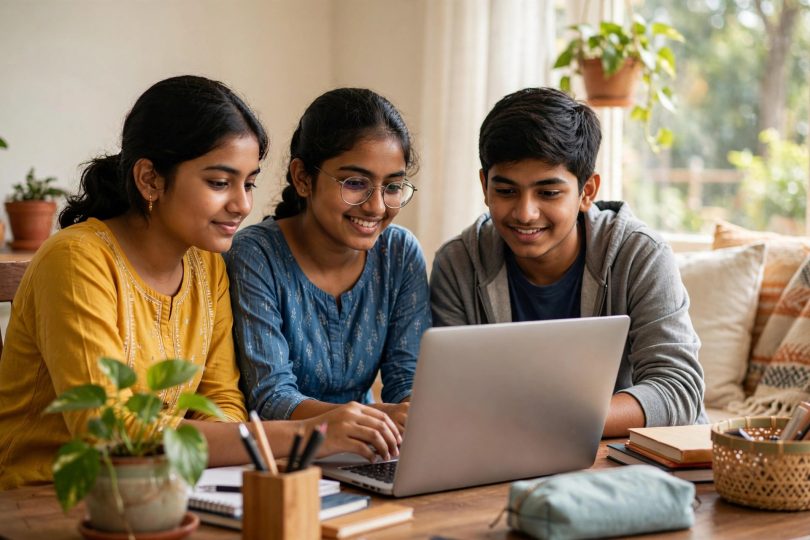

India is witnessing a quiet learning revolution in homes, hostels and small-town study rooms. Students who once depended only on textbooks and local tuition classes can now learn from some of the best teachers in the country, because free online courses for Indian students have made quality lessons available to anyone with a smartphone. From Class 10 science to spoken English, coding and competitive-exam preparation, these courses let learners study at their own pace without heavy fees. This guide explains which free courses are truly useful, how to choose the right one, and which simple habits turn free lessons into real marks, skills and confidence.
Why Free Online Learning Is Growing So Fast in India
A few years ago, good coaching was mostly limited to big cities, and fees were often more than a family’s monthly income. That picture has changed quickly. Affordable smartphones, cheap mobile data and better internet reach in smaller towns mean that a student in any district can now attend the same lecture as a student in Delhi or Bengaluru. Government platforms such as SWAYAM, NPTEL and DIKSHA, along with many private learning apps, have added thousands of lessons that cost nothing to start. For many families, free online courses for Indian students are no longer a backup option; they are the first choice.
Learning in Your Own Language
One big reason online learning works in India is language. Many platforms now offer lessons in Hindi and several regional languages, or provide subtitles so students can follow difficult topics comfortably. A concept that feels confusing in a second language becomes much easier when the explanation matches the language you think in. This small change has opened the door for first-generation learners who are smart and hardworking but were held back only by language.
Learn Anytime, Anywhere
Online courses also respect a student’s real life. Many learners help at home, travel long distances to school, or prepare for exams alongside a part-time job. Recorded video lessons, short quizzes and downloadable notes make it possible to study early in the morning, during a bus ride, or late at night. There is no fear of missing a class, because the class waits for you.
Types of Free Courses That Help Students the Most
Not every free course is equally useful. The best choice depends on your goal: better marks in school, success in an entrance exam, or a skill that leads to a job. Here are the categories that help the most.
School, Board and Competitive Exam Preparation
For school students, free courses cover complete syllabi for boards, with chapter-wise videos, practice questions and previous-year papers. Exam aspirants preparing for JEE, NEET, SSC, banking and state-level tests can find structured playlists and mock tests at no cost. The key is to follow one complete course instead of jumping between ten different teachers. Consistency with one good source almost always beats collecting hundreds of random videos.
Job-Ready Skills for College Students
College students and fresh graduates benefit most from skill-based courses. Free online courses for Indian students now include practical subjects that employers actually ask for, such as:
- Basics of programming in Python, Java or web development
- Spoken English, communication and interview preparation
- Digital marketing, social media and content writing
- Data entry, Excel, accounting basics and office tools
- Design basics using free tools for posters, videos and social media
Even a four-to-six-week course, finished sincerely, can give you a project or certificate that makes your resume stronger than a plain degree.
How to Choose the Right Free Course
With so many options, choosing wisely saves time. Before you start any course, check the full syllabus and see whether it matches your goal. Look at who is teaching and whether the lessons are updated recently. Read a few learner reviews, but do not chase popularity alone; a smaller course with clear explanations may suit you better. Also check the language of teaching, the total duration, and whether practice questions or assignments are included, because watching alone rarely builds real skill.
It also helps to start small. Pick one course, give it a full week, and judge it honestly. If the teaching style clicks, continue. If not, switch without guilt. You can find more study guidance and learner-friendly reads in our Education and Learning section, which collects practical articles for students at every stage.
Simple Habits That Help You Finish What You Start
Starting a free course is easy; finishing it is the real achievement. The good news is that a few simple habits make finishing much more likely.
Make a Small Weekly Timetable
Decide fixed study slots, even if it is only forty-five minutes a day. Treat those slots like a real class: phone on silent, notebook open, and one clear target for the session. Small daily progress feels slow in the first week but compounds beautifully over two or three months. Many successful learners say the timetable mattered more than the platform they chose.
Practice, Don’t Just Watch
Watching videos can create a false feeling of learning. After every lesson, close the video and write down what you understood in your own words. Solve the practice questions, make the small project, or teach the topic to a friend. Teaching is a powerful test: if you can explain it simply, you truly know it. Stories of young learners who built careers this way appear often in our Youth and Motivation section, and they all share this same habit of active practice.
Free Learning, Real Opportunities
The most encouraging part of this change is its fairness. Marks, skills and confidence are slowly becoming less about pin codes and family income, and more about effort and curiosity. Free online courses for Indian students will not replace good teachers or hard work, but they have removed the biggest barrier of all: access. If you are a student reading this on a phone right now, you already have everything you need to begin. Pick one course today, study a little every day, and let small steps build a big future. For more hopeful, practical reads like this, keep visiting Optimist India and share this guide with a friend who is preparing for exams or looking for a first job.