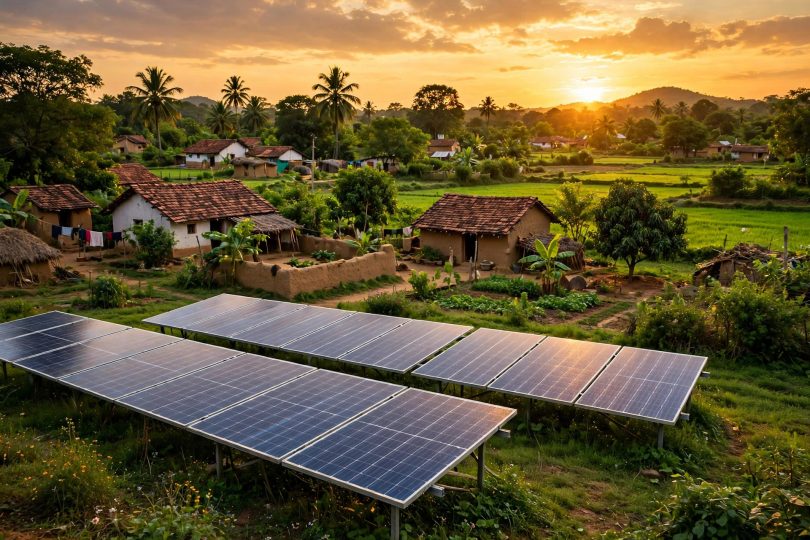

When the sun sets over a small Indian village, the day no longer has to end. In thousands of villages, rooftops now carry small blue panels that quietly collect sunshine through the day and return it as light, water and opportunity at night. This is the growing story of solar power for Indian villages: a clean, affordable technology that is improving study hours for children, easing farm work, helping small shops earn more and making homes safer after dark. It is not a story of giant projects alone; it is a story of ordinary families whose evenings have become brighter, literally and in every other way.
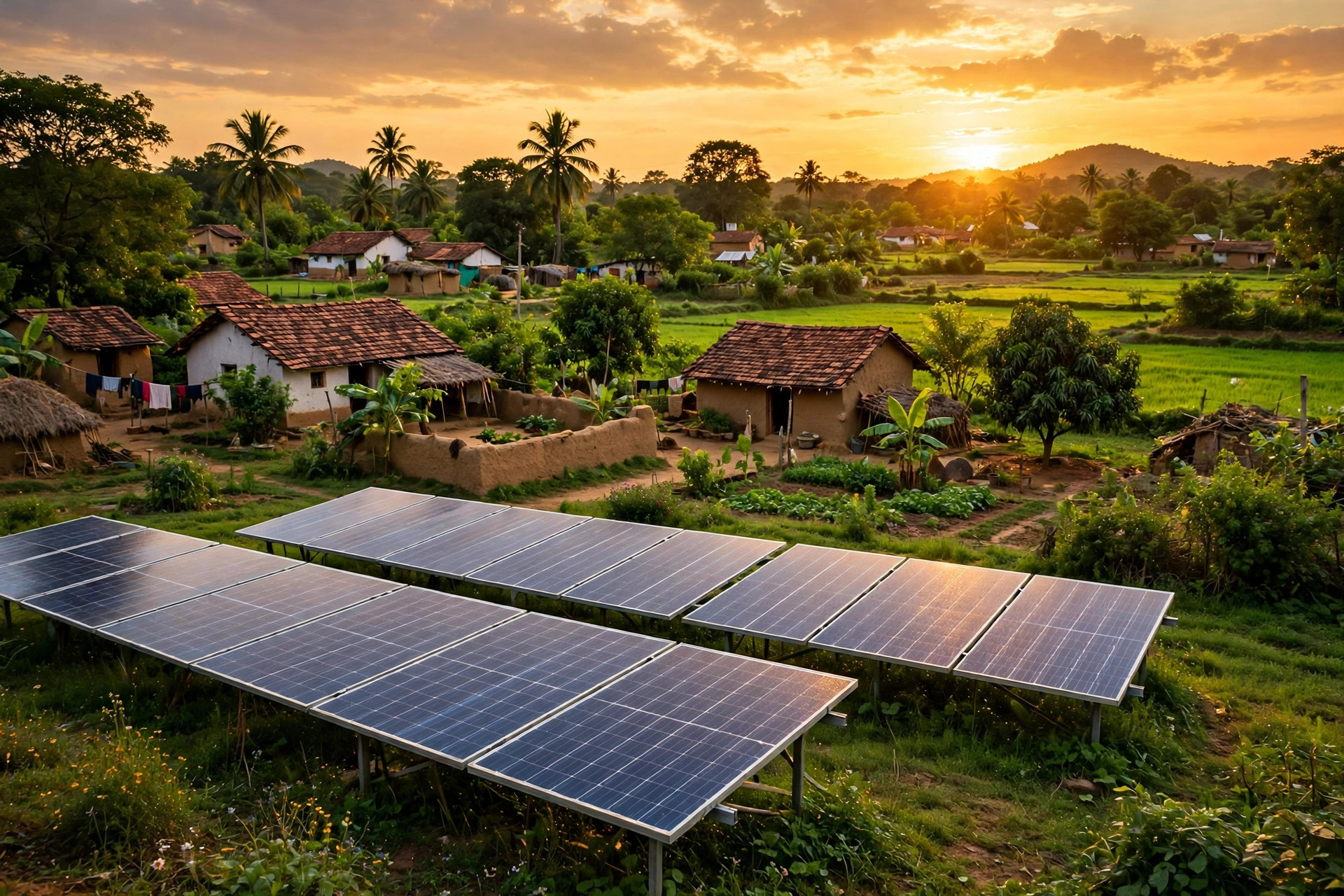
A Brighter Evening: What Changes First
The first change a family notices is light. A dependable solar lamp or home system replaces smoky kerosene lamps and unreliable supply, giving children a steady light to study under and elders a safer home to move around in. Streets and courtyards lit by solar lamps feel more secure, and women say evening hours have become more useful and less fearful. Light sounds like a small thing until you have lived without it; with it, dinner can be cooked calmly, homework can be finished properly and the day stretches a little longer for everyone.
Reliable light also changes how a family feels about the future. When a child can study after helping in the fields, education stops depending on the electricity schedule. Many parents describe this as the moment they began to believe their children’s lives could be genuinely different from their own.
Solar Pumps, Clean Water and Happier Farmers
For farming families, water is life, and solar power for Indian villages is transforming how water reaches fields and homes. Solar pumps lift water during the day without diesel costs or waiting for night-time electricity, so farmers can irrigate on a schedule that suits the crop rather than the grid. Lower running costs mean small farmers keep more of what they earn, and daytime watering reduces the risks that came with working around electric pumps at night.
In many villages, solar-powered purification units and community water points now provide cleaner drinking water close to home. This saves women and girls long walks with heavy pots, time that increasingly goes into schooling, rest and income-earning work instead.
Light for Study, Safety and Small Joys
Beyond farms and taps, solar energy supports the small joys that make village life richer: a fan during a hot night, a phone charged without paying a shopkeeper, a television or radio connecting the village to the wider world. Community solar installations at schools, health centres and panchayat buildings keep essential services running even when the grid fails, so vaccines stay cold, records stay powered and classrooms stay usable.
Small Businesses Run on Sunshine
Solar power is also becoming a quiet business partner. Tailors run sewing machines through the day, flour mills and small workshops work without diesel bills, and tea stalls and kirana shops keep lights and freezers running into the evening. Solar mini-grids, where a village-scale plant supplies many homes and shops, have shown how local energy creates local jobs: young people are trained to install panels, maintain batteries and repair systems, building skills that stay in the village. More such grassroots progress stories appear in our Social Impact and Change section.
From One Panel to a Whole Village Ecosystem
What makes the solar story truly powerful is how one installation encourages the next. A family that installs a home system shows neighbours that the technology works through cloudy weeks and busy seasons. A shopkeeper whose freezer runs all day inspires the tailor next door. Soon the village has a small ecosystem: a charging station here, a solar streetlight there, a trained young technician whom everyone knows by name. Local schools use the change as a living lesson, letting children see renewable energy not as a textbook diagram but as the reason their classroom fan turns and their village well fills.
This demonstration effect is why solar spreads fastest where the first few users are respected and happy. Their experience answers the questions no advertisement can: Does it really work? Who repairs it? Is it worth the money? In village after village, the answer travels by word of mouth, and each new rooftop makes the next one easier.
Women Lead Many Solar Success Stories
Some of the most inspiring chapters of this change are written by women. Across India, women’s self-help groups have become solar entrepreneurs: assembling lamps, selling and servicing home systems, and running small solar shops. For many, it is a first independent income and a new standing in the community. When the person who brings light to a village is a neighbour’s daughter or mother, trust in the technology grows faster, and other women come forward to learn. These are exactly the kind of hopeful developments we love to share in Positive News India.
Support That Helps Villages Adopt Solar
Government programmes and subsidies for rooftop solar, solar pumps and village electrification have lowered the starting cost for families, while banks and microfinance groups offer small loans that are repaid from savings on diesel, kerosene and charging fees. Equally important is after-sales care: villages adopt solar happily when a trained local technician can fix a fault quickly. The lesson from successful villages is consistent: affordable finance, simple technology and local maintenance turn a one-time installation into a lifelong habit. Training programmes that teach rural youth to install and service solar systems deserve special credit here. A village with its own solar technician never waits weeks for a repair, and the technician gains a respected, future-ready livelihood without leaving home. Energy, employment and confidence grow together, which is precisely how lasting development is supposed to work.
Sunshine, Turned into Opportunity
Solar power for Indian villages is proof that progress does not always arrive with noise and concrete; sometimes it arrives quietly, on a rooftop, one sunbeam at a time. It lights study lamps, waters fields, cools vaccines, powers sewing machines and gives families control over their evenings. As costs fall and local skills grow, this sunshine story will only spread further. If it brightened your mood, share it with someone who loves hopeful news, and keep following Optimist India for more stories of change from every corner of the country.