


The Chai Stall Test: When the Smallest Shop Takes the Newest Money
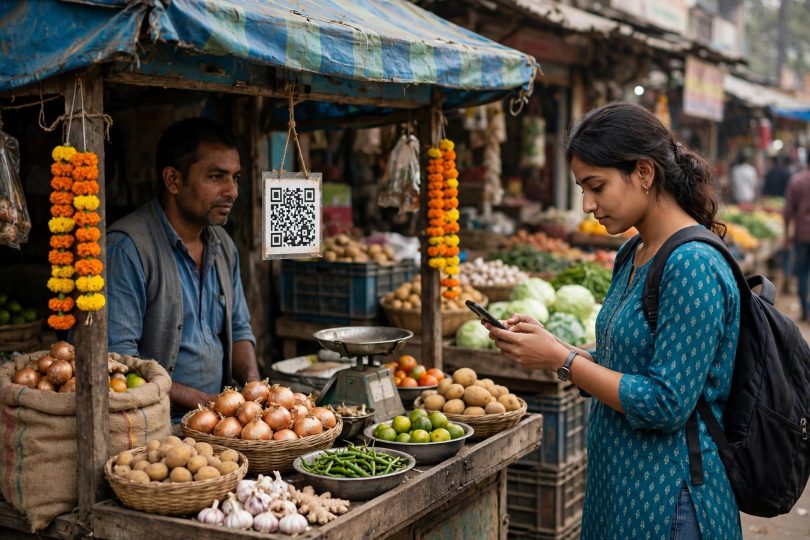
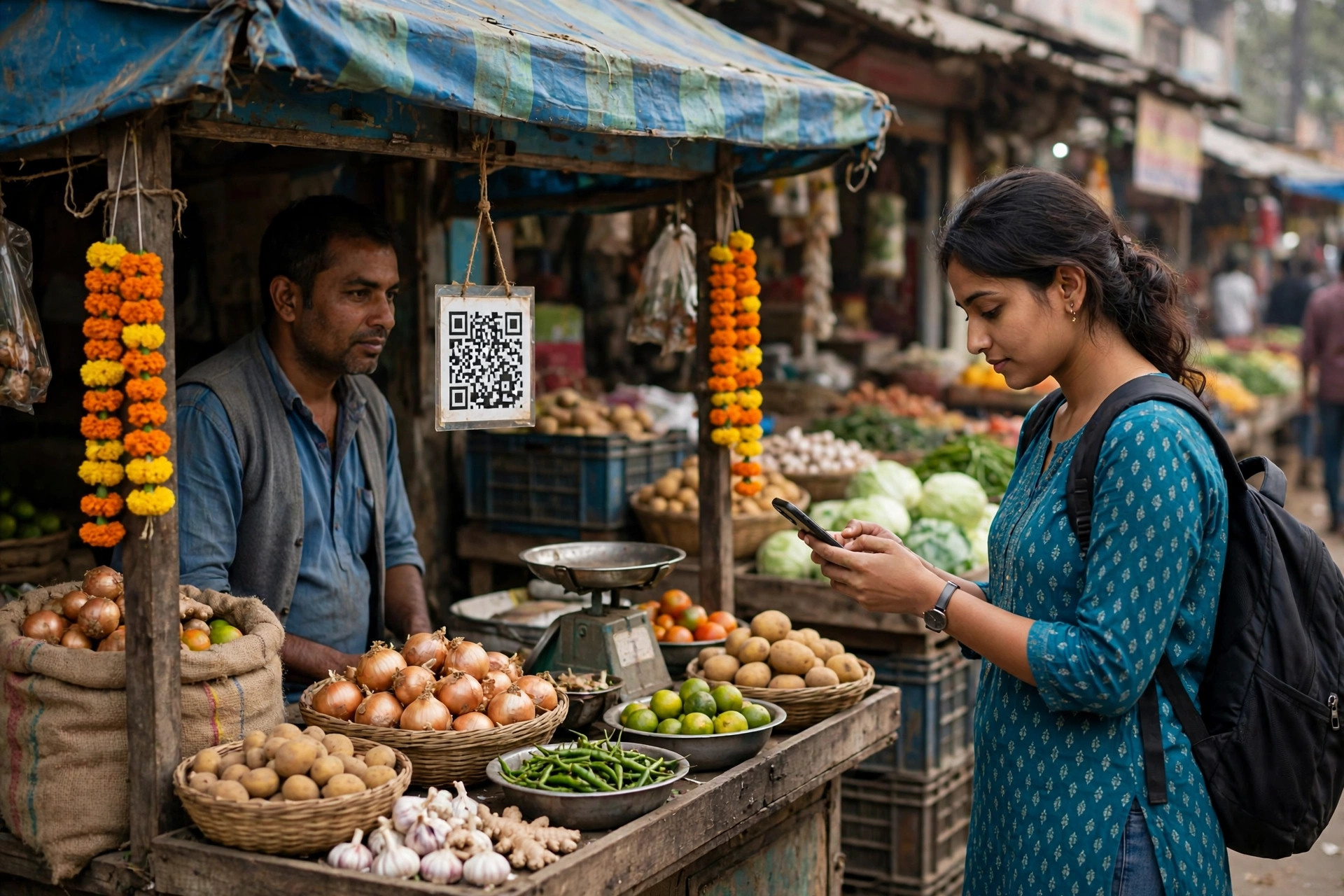
Stand at any busy street corner in India and watch the smallest transaction in the economy: a ten-rupee chai, paid for not with a coin but with a phone pointed at a faded QR code, a cheerful confirmation sound, and both parties moving on in under five seconds. That tiny moment, repeated billions of times a month, is the visible tip of the most successful public digital payment system on Earth. Understanding how UPI changed daily payments means understanding a deliberate design philosophy: payments as free public infrastructure, like roads — built once by a public body (the National Payments Corporation of India, launched in 2016), open to every bank and every app, and priced at zero for the person-to-person transfers that make up daily life. The result rewired behaviour from the vegetable market to the boardroom: auto drivers who never touched a card machine became digital merchants, parents in villages receive support from children in cities instantly and free, and the mental category of “small money” quietly left the wallet. This article traces how it happened — the design choices that made adoption inevitable, the daily-life changes that followed for vendors, families, and small businesses, the honest challenges (fraud, failed payments, the digital divide), and why the world’s payment giants now study a system built to be too cheap to compete with. It pairs with our guide to how to build skills employers want — the opportunity side of the same digital decade — because the revolution UPI started needs a generation equipped to build what comes on top of it.
The Design Choices That Made Adoption Inevitable
UPI won on four decisions that look obvious only in hindsight. It was free. Zero merchant fees on the person-to-merchant rails that matter for small trade removed the exact barrier that had kept card machines in big shops for thirty years: a QR code costs a printed sticker, and settlement arrives instantly rather than in days, which for a vendor buying tomorrow’s stock with today’s takings is the difference between a tool and a toy. It was interoperable. Any app could pay any account at any bank — no walled gardens, no “my wallet only works in my network” — so competition exploded among apps (PhonePe, Google Pay, Paytm and dozens more) on experience and service, while the underlying rails stayed public and shared. It was radically simple at the point of use. A virtual payment address reads like an email, a QR scan needs no typing at all, and the whole transaction survives a budget phone and a patchy connection — design mercy that mattered enormously in a market where the median device is modest and the user’s patience is earned in seconds. And it arrived at the perfect moment: the 2016 twin shocks of demonetisation (which pushed millions to try digital payment in a single season) and the Jio data revolution (which collapsed mobile data prices into the world’s cheapest) gave the new rails a population suddenly equipped, connected, and motivated. Systems thinking, public patience, and timing — the revolution was engineered, then detonated by circumstance, and the order matters: without the engineering, the moment would have passed like every payment fad before it.
Daily Life, Rewired: Vendors, Families, and the End of “Exact Change”
The statistics are staggering in aggregate — UPI now processes well over ten billion transactions in a typical month, more than the card networks of most continents — but the change is best read at ground level. The street vendor and small shopkeeper gained a till that never needs a float, never risks a counterfeit note, settles instantly, and quietly builds a transaction history — and that history is becoming creditworthiness, the seed from which small loans for the previously invisible economy are beginning to grow. The family economy transformed: remittances that once meant a money-order queue or a relative’s bus journey now move instantly between a migrant worker’s phone and a village home, arriving in emergencies in minutes; household staff, tutors, and landlords entered the documented economy one QR code at a time. Public life digitised around it — metro gates, toll plazas, parking, temple donations, government fees — each removing a queue and a cash-handling cost. And a subtle social shift: the phrase “exact change” and its attendant small humiliations (the shopkeeper’s sigh, the toffee offered in lieu of coins) are genuinely fading from Indian daily life, replaced by a system in which ten rupees is ten rupees, exactly, instantly, anywhere. Even the confirmation sound of a payment landing — played aloud by the little speaker boxes on a million counters — became a new ambient sound of Indian commerce, a public receipt that builds trust between strangers in a way no paper slip ever did.
The Honest Challenges — and What Comes Next
A balanced account must carry the friction too. Fraud followed the money: social-engineering scams — fake customer-care numbers, screen-sharing tricks, collect-request deception — prey on first-generation digital users, and the system’s very speed makes fraudulent transfers hard to recall; the countermeasures (in-app warnings, cooling periods, bank vigilance, and a national awareness effort) are an arms race, not a solved problem, and digital literacy is now as essential as the rails themselves. Reliability has limits: failed and pending transactions at peak load frustrate users and vendors, and small merchants in low-connectivity regions still keep cash as the system of record. The zero-fee model’s economics are debated — banks and apps carry real costs on free rails, and how the ecosystem funds itself long-term remains an open policy question. And the digital divide is the standing caveat: UPI’s India is the smartphone-owning majority, and the feature-phone, elderly, and offline populations need the parallel innovations (USSD flows, offline payment pilots, voice-based interfaces) that are arriving more slowly. What comes next is already visible: UPI has gone international (linkages with Singapore, the UAE, France and more), credit lines are being layered onto its rails, and its template — public, interoperable, near-free instant payments — is being studied and adapted by central banks worldwide. Few technologies earn the word revolution honestly. One that moved a billion-person economy’s smallest daily transaction from paper to phone, for free, in under a decade, has earned it — and the chai still costs ten rupees, paid in five seconds, exactly as it should be.





[…] — written communication — that multiplies the value of every other. It pairs with our story of how UPI changed daily payments — a reminder that the employers doing the hiring are building on new digital rails, and the […]