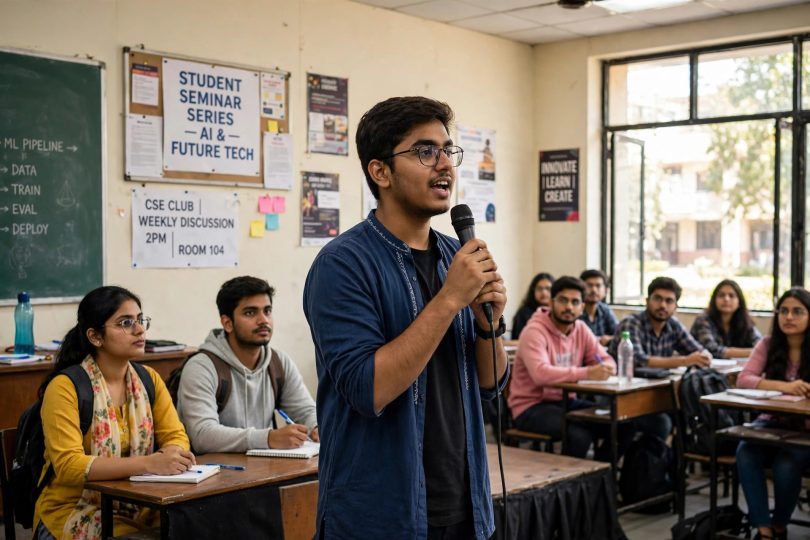

Ask most students what they fear more than a difficult exam, and many will say speaking in front of a class. Hands shake, voices tremble, and minds go blank, even for students who know their subject well. Yet the ability to speak clearly in public shapes careers far beyond the classroom: interviews, presentations, meetings and leadership all depend on it. Public speaking skills for Indian students are therefore among the most valuable abilities a young person can build, and the good news is that nobody is born with them. Public speaking skills for Indian students are learned through practice, preparation and small, steady steps, and this guide shows exactly how to start, even if you are terrified today.
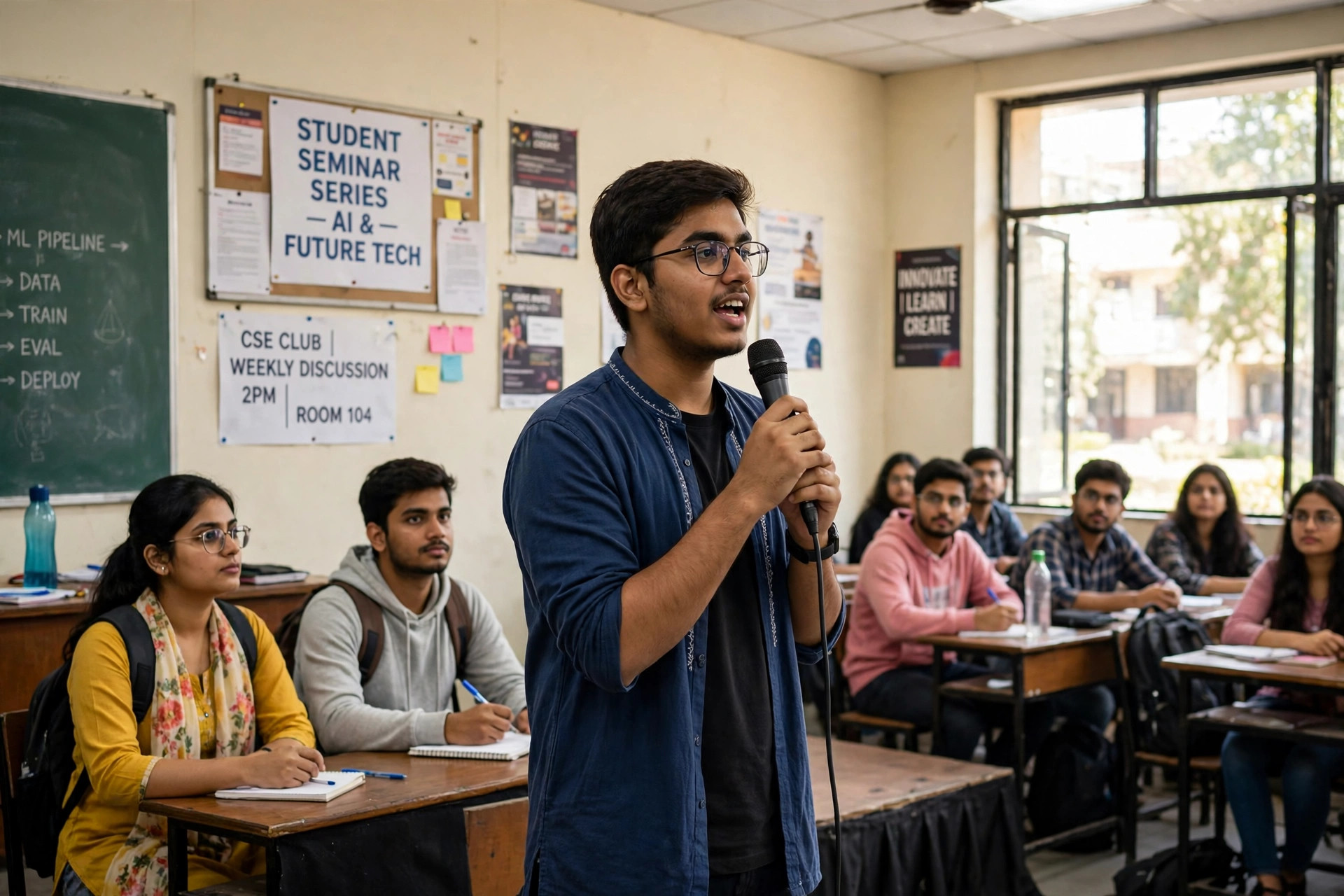
Why Public Speaking Matters So Much
In college and at work, ideas only matter if you can communicate them. A brilliant project explained badly loses to an average project presented well. Recruiters consistently rank communication among the top skills they seek, and students who speak confidently stand out in group discussions, interviews and seminars. Public speaking also builds general confidence: once you can address fifty people, asking a question in class or talking to a stranger feels easy.
For Indian students, there is an extra dimension. Many study in English while thinking in their mother tongue, which adds pressure. Others come from schools where students rarely spoke up, so the habit of expressing opinions never formed. Both are surmountable. Speaking well is a skill, like cricket or coding, and it improves with the same formula: regular, deliberate practice.
Start Small and Safe
The biggest mistake nervous speakers make is aiming too high too soon. Do not begin with a stage and five hundred people. Begin with one trusted friend: explain a topic for two minutes and ask for honest feedback. Then try a small study group, then a classroom presentation, then a college event. Each step feels less frightening because the previous one proved you can survive it.
Joining a club or society accelerates this enormously. Debate clubs, Toastmasters-style groups, theatre societies and student associations give regular, low-stakes chances to speak. If your college has none, start an informal practice circle with friends: meet weekly, pick topics, and take turns speaking for three minutes. The group that practises together improves together, and encouragement from peers removes much of the fear.
Prepare Like a Professional
Good speakers look spontaneous because they prepare thoroughly. Know your topic deeply enough to explain it simply, and organise your talk into three parts: a clear opening, two or three main points, and a memorable closing. Write down your key points, not a full script; reading aloud sounds stiff, while speaking from points sounds natural. Practise out loud at least three times, ideally standing up and timing yourself. Record yourself on your phone once: most students are surprised how much better they sound than they feared, and spotting one habit to fix, such as speaking too fast, transforms the next attempt.
Preparation also means anticipating questions. Think of the two toughest questions your audience might ask and prepare short answers. Knowing you can handle questions removes a major source of anxiety. Students who combine speaking practice with structured self-study go further fastest, and our guide to free online courses for Indian students can help you build the knowledge base your talks draw on.
Handling Fear and Nervousness
Nervousness before speaking is normal, even for experienced speakers. The trick is managing it, not eliminating it. Slow, deep breathing before you begin calms your body. Arriving early and chatting with a few audience members makes the room feel friendly rather than hostile. Moving slowly, pausing between points, and making eye contact with one friendly face at a time all help. Remember that the audience is almost always on your side: they want you to do well, and they notice your message far more than your mistakes.
If your mind goes blank, pause, smile, glance at your notes and continue. Audiences barely register a short pause, but they remember panic. Reframing helps too: tell yourself you are excited rather than scared, because the physical sensations are similar and the label changes how you perform. Over time, the fear shrinks with every talk, until speaking becomes something you look forward to rather than dread.
Body Language and Voice
How you speak matters as much as what you say. Stand straight, keep your hands free rather than in pockets, and use natural gestures to emphasise points. Speak slowly enough that every word is clear, and vary your tone so important points stand out. Avoid filler words like “um” and “actually” by pausing instead; silence feels awkward to the speaker but sounds confident to the listener. Practise projecting your voice so the back row hears you without shouting.
Eye contact deserves special attention. Sweeping your gaze across the room, holding contact with one person for a few seconds before moving on, creates connection and authority. Avoid staring at slides, notes or the floor. If you use slides, keep them minimal: a few words or one image per slide, never paragraphs that you read aloud. The audience came to hear you, not to watch you read.
Speaking in English When It Is Not Your First Language
Many Indian students worry their English is not good enough. Remember that clarity beats perfection: simple, correct sentences delivered confidently impress far more than complex sentences stumbled through. Build vocabulary by reading and listening daily, but do not memorise fancy words for a talk. Use the words you own. If you forget a word mid-talk, describe it simply and move on; nobody will mind. Practising with friends in English, even in casual conversation, steadily builds fluency, and every talk you give adds to it.
For broader advice on building career-ready abilities, explore the Youth and Motivation section of this site, and pair speaking practice with the career guidance in our article on digital skills for Indian youth.
Keep Improving After Every Talk
Growth comes from feedback. After each talk, ask two people what worked and what could improve, and note one thing to practise next time. Watch good speakers, in class, online or on stage, and steal techniques you admire: an opening story, a rhetorical question, a powerful pause. Volunteer for every speaking chance, from anchoring events to presenting projects, because volume of practice is the single biggest predictor of improvement. Within a year of regular practice, most students are unrecognisable from their nervous first attempt.
Conclusion
Public speaking skills for Indian students open doors that marks alone cannot: interviews won, ideas heard, leadership earned. Start small, prepare well, manage your nerves and practise relentlessly. Your first talk may be shaky, and that is fine; every confident speaker you admire once stood exactly where you stand now. Take the first step this week, and visit OptimistIndia for more motivation and practical guidance for young India.