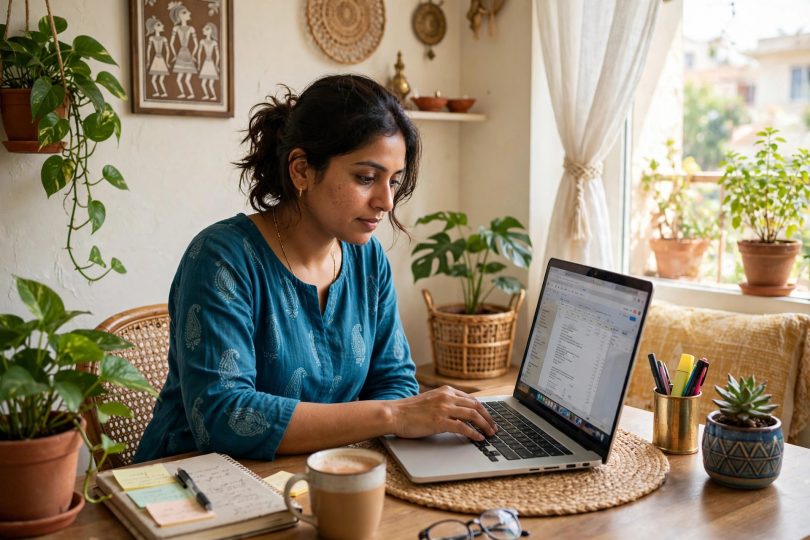

A decade ago, working from home in India was rare and often viewed with suspicion. Today, lakhs of Indians earn their living from their living rooms, from freelance designers and writers to full-time remote employees of global companies. Work from home jobs in India have grown fast, driven by cheap internet, digital tools and employers who now care more about results than office attendance. Work from home jobs in India offer freedom, saved commuting time and opportunities for people in small towns, homemakers returning to work, and students earning while studying. But the remote world also has traps: scams, isolation and unsteady income. This guide separates real opportunities from false promises and shows how to start safely.

Why Remote Work Took Off in India
The pandemic forced companies to try remote work at scale, and many discovered it worked. Office costs fell, employees were happier, and hiring was no longer limited to big cities. Even after offices reopened, hybrid and fully remote roles stayed, especially in technology, customer support, content, design, marketing and education. For workers, the benefits are obvious: no long commutes in traffic, lower expenses, flexible hours and the chance to live near family while working for a company anywhere in the world.
India’s advantages make it a remote-work hotspot: a large English-speaking workforce, strong technical education and a time zone that overlaps with both Europe and parts of Asia. Small towns are benefiting most, as young people who once had to migrate to metros can now build careers from home.
Real Work From Home Opportunities
Genuine remote work falls into a few broad categories. Freelancing covers writing, graphic design, video editing, programming, translation, data entry and virtual assistance, usually paid per project through platforms or direct clients. Remote employment means a regular salaried job done from home, common in IT support, customer service, sales, content and teaching. Online tutoring and teaching have boomed, with platforms and private students paying for school subjects, languages, music and competitive exam coaching. Content creation, from YouTube and blogging to social media management for small businesses, can grow into full-time income, though it takes time. Finally, small online businesses, selling products or services through marketplaces and social media, let owners run everything from home.
The common thread is skill. Remote employers hire for what you can do and prove, not for degrees alone. A portfolio, a few completed projects or strong test scores often matter more than certificates. Building those skills is the first investment, and our article on digital skills for Indian youth maps out the abilities remote employers value most.
Skills You Need to Succeed Remotely
Remote work rewards self-discipline above all. Without a manager watching, you must plan your day, meet deadlines and stay focused despite household distractions. Communication is equally vital: remote workers write clear messages, join video calls confidently and ask questions early instead of waiting. Basic digital fluency, email, spreadsheets, video conferencing and collaboration tools, is now a minimum requirement for almost every remote role.
Then comes your specialism. Writers need strong language and research skills, designers need portfolio-ready tools, programmers need a language and projects to show, and tutors need subject mastery plus patience. Pick one direction, learn it properly over a few months, and build proof of work before chasing clients. One strong skill with evidence beats five half-learned ones.
How to Find Genuine Jobs and Avoid Scams
This is the most important section of this guide, because work-from-home scams target hopeful job seekers daily. Remember one golden rule: a genuine employer never asks you to pay to get a job. Fees for registration, training kits, security deposits or software are red flags. Be suspicious of offers that promise huge earnings for tiny effort, arrive through random WhatsApp messages, or pressure you to decide immediately. Research every company: check its website, reviews and registration, and be wary of vague job descriptions and personal email addresses.
- Never pay any fee for a job offer, interview or training
- Verify the company through its official website and reviews
- Be cautious of “earn lakhs from home with no skills” promises
- Use established job portals and freelancing platforms, not random messages
- Read contracts carefully before sharing bank or identity details
Safe places to start include well-known job portals with remote filters, established freelancing platforms, company career pages, and referrals from people already working remotely. For freelancing, begin with small projects to build ratings, then raise your rates as reviews accumulate.
Setting Up Your Home Workspace
You do not need an expensive setup, but you do need the basics: a reliable internet connection, a quiet corner, a decent phone or computer, and backup power or a mobile data plan for outages. A fixed routine helps enormously: set working hours, dress for work, and tell family when you must not be disturbed. Take real breaks and stop at a fixed time, because remote work’s biggest health risk is never switching off.
Managing money matters too when income varies. Freelancers should save a portion of every payment for lean months and taxes, and keep simple records of earnings. Receiving payments digitally is now easy and safe for most remote workers, and our guide to digital payments in India explains how UPI and digital transfers work for everyday earners.
Staying Connected and Growing
Isolation is remote work’s hidden challenge. Without office colleagues, you can feel lonely and miss learning opportunities. Counter it deliberately: join online communities in your field, attend virtual events, find a mentor, and keep in touch with fellow freelancers. Regular learning is essential, since remote fields change fast; a short course every few months keeps your skills current and your rates rising.
Career growth remotely is real but requires visibility. Keep a record of your achievements, share work samples, ask clients for testimonials, and update your profiles regularly. Remote workers who document results get promoted and rehired just like office workers, sometimes faster, because their output speaks for itself.
Is Remote Work Right for You?
Remote work suits self-motivated people who enjoy independence and can manage their own time. It suits parents, caregivers, people in small towns and anyone who values flexibility over office social life. It suits less those who need constant supervision, thrive on in-person energy, or struggle with boundaries at home. There is no shame in preferring an office; the right choice is the one that fits your personality and stage of life. Many people mix both, working remotely part of the week and in person for the rest.
Conclusion
Work from home jobs in India are a genuine, growing path to income and independence, provided you build a real skill, find work through trustworthy channels, and guard against scams. Start with one skill, create proof of your work, and take on small projects to build confidence and reputation. The freedom of remote work is worth the discipline it demands. For more practical guidance on careers, money and positive change, keep reading OptimistIndia.