
Property research has become a digital-first activity. Potential buyers often explore projects online, compare neighborhoods, watch property videos, check amenities, and review available options before contacting a developer or real estate professional. This makes digital visibility an important part of attracting and engaging prospective customers.
A successful online strategy should do more than generate traffic. It should provide useful information, create convenient enquiry opportunities, and help businesses manage prospects throughout the buying journey.
Develop a Property-Focused Website
A real estate website should make important project information easy to find. Visitors may want to know about configurations, amenities, floor plans, location advantages, construction status, and other property details.
Dedicated project pages can organize this information in one place. Clear calls to action can then encourage visitors to request a brochure, schedule a callback, or enquire about a site visit.
The website should also be optimized for mobile users, as property research frequently takes place on smartphones.
Create Content Around Buyer Questions
Potential buyers have many questions before contacting a real estate business. They may want information about neighborhoods, connectivity, property types, investment considerations, amenities, or the buying process.
Creating useful content around these subjects can help businesses attract people at different stages of their research. Location guides, FAQs, property comparisons, buying guides, and project-focused articles can all contribute to a useful content library.
This content can support Real estate lead generation by attracting relevant visitors and directing them toward appropriate property pages.
Focus on Local Search Visibility
Real estate decisions are strongly connected to location. Someone searching for a property is often interested in a specific city, neighborhood, or nearby landmark.
Businesses can develop location-specific pages and content that explain the area’s connectivity, infrastructure, lifestyle facilities, educational institutions, commercial centers, and other relevant factors.
Local search optimization can also help businesses become easier to discover when users search for nearby properties or real estate services.
Use Video to Explain Properties
Static images are useful, but video can provide a more detailed view of a property. Walkthroughs, amenity videos, construction updates, neighborhood tours, and virtual property experiences can help prospective buyers understand a project before arranging a physical visit.
These videos can be distributed across websites, social media, YouTube, and advertising campaigns. Using accurate and informative visuals can also make property presentations more engaging.
Combine Search and Social Campaigns
Search marketing can capture users who are already looking for properties, while social media can introduce projects to relevant audiences and support ongoing engagement.
Paid campaigns can be created around individual projects, locations, property categories, or specific marketing objectives. Organic content and SEO can complement these campaigns by building long-term visibility.
A real estate digital marketing agency can help coordinate search optimization, paid advertising, social media, content creation, landing pages, and analytics into a unified strategy.
Make Lead Forms Simple
A complicated enquiry form can discourage visitors from completing it. Businesses should request information that is genuinely useful to the sales team while keeping the process straightforward.
Depending on the campaign, forms may ask about preferred property type, location, budget range, and expected purchase timeline. Visitors can also be given alternative contact options such as phone or messaging where appropriate.
Connect Enquiries With Follow-Up
Generating an enquiry does not guarantee a sale. Sales teams need an organized system for responding to prospects and tracking conversations.
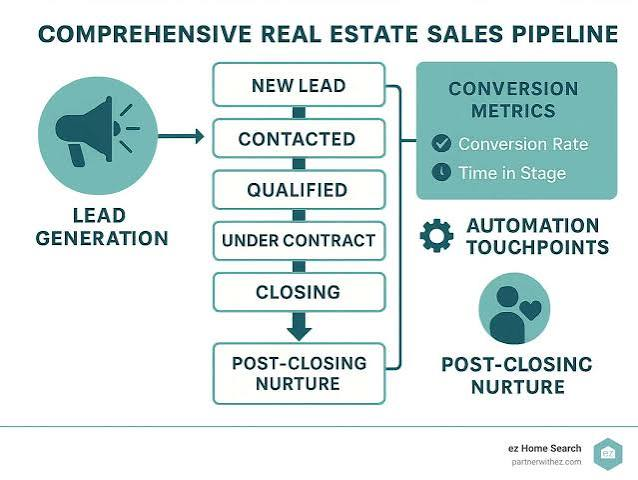
CRM software can help businesses record lead information, assign enquiries, schedule follow-ups, and monitor the progress of prospects. Prompt communication can also help ensure that interested visitors receive relevant information while their property search is active.
Measure Meaningful Results
Businesses should look beyond website traffic and total enquiry numbers when evaluating digital campaigns. Metrics such as qualified enquiries, response rates, scheduled site visits, and sales opportunities can provide deeper insights.
Tracking the customer journey from first interaction to sales conversation can help identify which marketing activities are contributing to business objectives.
Keep Improving the Strategy
Digital marketing is an ongoing process. Search behavior, advertising platforms, property inventory, customer expectations, and business priorities can change over time.
Regularly reviewing website content, campaign performance, landing pages, and lead-management processes allows real estate businesses to make informed improvements.
Conclusion
A strong real estate digital strategy combines useful content, local visibility, attractive property presentation, search marketing, social media, effective landing pages, and organized follow-up. When these elements work together, businesses can create a smoother path from online discovery to genuine property enquiries while building a stronger and more sustainable digital presence.