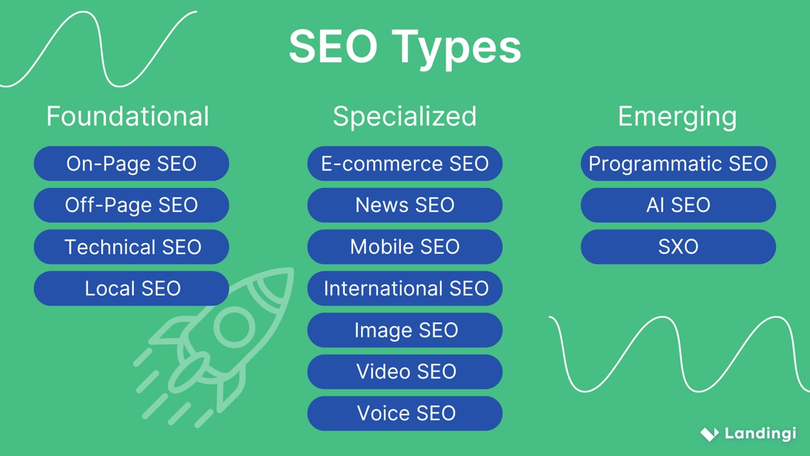

Are you learning SEO but feeling confused about which skills deserve your attention first? Stay calm, because every successful SEO professional starts with the basics and improves through regular practice.
You do not need to master every tool or technique in one day. You only need a clear learning path that helps you build one useful skill at a time.
This guide explains the types of SEO skills every learner should master, including keyword research, content optimization, technical SEO, link building, data analysis, and other important areas.
Types of SEO Skills Every Learner Should Master
SEO involves more than adding keywords to a page. A skilled learner must understand how search engines, websites, content, and users work together. The following skills can help you improve rankings, attract relevant visitors, and support business growth.
Here are the main SEO skills:
- Keyword Research
- Search Intent Analysis
- On-Page SEO
- SEO Content Writing
- Technical SEO
- Internal Linking
- Link Building
- Local SEO
- Website Performance Optimization
- SEO Data Analysis
- Competitor Research
- Communication and Reporting
1. Keyword Research
Keyword research helps you understand what people type into search engines. It gives you useful ideas for blog posts, service pages, product pages, and website categories. A good SEO learner should know how to find relevant keywords instead of choosing terms only because they have high search volume.
You should study keyword difficulty, search intent, competition, and business value. Long-tail keywords can often give new websites a better chance to rank. You should also learn how to group closely related terms under one main topic. Strong keyword research creates the foundation for every successful SEO plan.
Important keyword research skills include:
- Finding relevant seed keywords
- Discovering long-tail phrases
- Checking keyword competition
- Studying monthly search volume
- Grouping related keywords
- Choosing terms with business value
2. Search Intent Analysis
Search intent explains why a person searches for a particular phrase. Some people want information, while others want to compare products, contact a company, or make a purchase. Your page may struggle to rank when its purpose does not match the user’s expectation.
You should review the current search results before creating content. Look at the types of pages, titles, formats, and answers that appear near the top. Then create a page that meets the same need in a clearer and more useful way. Good intent analysis helps you attract visitors who truly need your content.
The main types of search intent include:
- Informational: The user wants to learn something.
- Commercial: The user wants to compare available choices.
- Transactional: The user wants to buy or take action.
- Navigational: The user wants to find a specific website.
- Local: The user wants a nearby business or service.
3. On-Page SEO
On-page SEO involves improving the visible and hidden elements of a webpage. These elements help search engines understand the topic and help visitors read the content easily. A learner should know how to optimize titles, headings, URLs, descriptions, images, and page copy.
You should place the primary keyword naturally without repeating it too often. Clear headings can improve readability and show the structure of the page. Short URLs can also make pages easier to understand and share. Strong on-page SEO connects useful content with a clear page structure.
Learners who prefer organized lessons may build these practical abilities through the best SEO learning course that includes real website exercises.
Important on-page elements include:
- SEO title
- Meta description
- Page URL
- H1, H2, and H3 headings
- Main page content
- Image alt text
4. SEO Content Writing
SEO content writing combines helpful information with clear optimization. A good writer answers the reader’s question without forcing keywords into every paragraph. You should use simple language, useful examples, short paragraphs, and descriptive headings.
Strong content should cover the topic in enough detail to satisfy the reader. It should also offer original advice instead of repeating the same points from other websites. You must edit the article before publishing it and remove weak or unnecessary sentences. Helpful content can attract traffic, links, shares, and returning visitors.
Always write for people first and optimize the page naturally.
Strong SEO content should offer:
- A clear answer
- Accurate information
- Practical advice
- Original examples
- Easy formatting
- Natural keyword use
5. Technical SEO
Technical SEO helps search engines access, crawl, understand, and index a website. A website may publish excellent content but still struggle when technical problems block important pages. Learners should understand sitemaps, robots.txt files, canonical tags, redirects, and indexing settings.
You should also know how to find broken links and error pages. Mobile usability, website security, and page speed also form part of technical SEO. You do not need advanced coding knowledge to understand basic technical issues. However, you should know when to involve a developer.
Basic technical SEO skills include:
- Checking website indexing
- Reviewing XML sitemaps
- Understanding robots.txt
- Managing redirects
- Fixing broken links
- Reviewing canonical tags
6. Internal Linking
Internal links connect one page of a website with another page on the same website. They help visitors discover more useful information and move through the site easily. They also help search engines find pages and understand how different topics connect.
You should link from relevant pages instead of adding links without a clear reason. Use descriptive anchor text that explains what the reader will find after clicking. Avoid using the same exact anchor text too often. A strong internal linking structure can support important pages and improve the overall user journey.
Use internal links to connect:
- Related blog posts
- Main service pages
- Product categories
- Important landing pages
- Supporting guides
- Older useful content
7. Link Building
Link building involves earning links from other websites. Search engines may view relevant and trustworthy backlinks as signs of authority. However, learners should focus on link quality instead of collecting a large number of weak links.
You can earn backlinks by publishing useful guides, research, templates, statistics, or expert opinions. You can also build relationships with website owners and contribute helpful content to relevant platforms. Avoid spammy websites and paid link schemes that promise quick rankings. Ethical link building requires patience, quality content, and genuine outreach.
Safe link-building methods include:
- Guest posting on relevant websites
- Publishing original research
- Creating useful resources
- Offering expert comments
- Building industry relationships
- Finding broken-link opportunities
8. Local SEO
Local SEO helps businesses reach customers in a specific city, town, or service area. It works well for restaurants, clinics, stores, agencies, tradespeople, and other location-based businesses. Learners should understand how to optimize business profiles, local pages, reviews, and contact details.
A business should use the same name, address, and phone number across important platforms. Useful local content can also answer questions from people in the target area. Customer reviews can improve trust and support local visibility. Strong local SEO connects nearby customers with businesses that can help them.
Important local SEO tasks include:
- Optimizing the business profile
- Adding correct contact information
- Collecting genuine customer reviews
- Creating useful location pages
- Using local keywords naturally
- Keeping business hours updated
9. Website Performance Optimization
Website performance affects both visitors and search visibility. A slow website can frustrate users and make them leave before the page loads. Large images, heavy scripts, unnecessary plugins, and weak hosting often reduce speed.
You should learn how to compress images and remove features that provide little value. Browser caching and file compression can also improve loading times. Always test important pages on both mobile and desktop devices. A fast website creates a smoother experience and supports better engagement.
Performance improvements include:
- Compressing large images
- Removing unused plugins
- Reducing heavy scripts
- Enabling browser caching
- Choosing reliable hosting
- Testing page speed regularly
10. SEO Data Analysis
SEO data analysis helps you understand whether your work produces useful results. You should track rankings, impressions, clicks, organic traffic, engagement, and conversions. These numbers can show which pages perform well and which pages need improvement.
Do not focus only on traffic because high visitor numbers may not support business goals. A page should also attract the right audience and encourage useful actions. Compare data across different time periods to find positive or negative changes. Good analysis helps you make decisions based on evidence instead of guesses.
Useful SEO metrics include:
- Organic traffic
- Search impressions
- Search clicks
- Keyword positions
- Engagement time
- Leads and conversions
11. Competitor Research
Competitor research helps you understand what other websites do well. You can study their keywords, content topics, backlinks, page structure, and search positions. This research may reveal opportunities that you have not considered.
However, you should not copy every competitor strategy. Their audience, authority, budget, and goals may differ from yours. Focus on useful gaps that match your own website and customers. Try to create clearer, more complete, and more practical content than the existing results.
Review competitors for:
- Ranking keywords
- Popular pages
- Content gaps
- Backlink sources
- Page formats
- Internal linking ideas
12. Communication and Reporting
SEO professionals often work with clients, writers, designers, developers, and business owners. Good communication helps everyone understand the goals, tasks, and expected results. You should explain technical issues in simple language instead of using unnecessary terms.
A clear report should show what changed, why it changed, and what actions the team should take next. Avoid filling reports with numbers that do not support a useful decision. Honest communication also helps you set realistic expectations about rankings and traffic. Strong reporting can build trust and improve long-term working relationships.
Good SEO reports should explain:
- Work completed
- Performance changes
- Important problems
- Business results
- Recommended actions
- Priorities for the next period
How to Improve Your SEO Skills Through Practice
Reading about SEO can build your knowledge, but practical work develops real confidence. Start with a small website or personal project and apply each skill step by step.
- Build a simple website: Use it to practise page optimization, internal links, and technical checks.
- Research real keywords: Choose terms connected to a clear audience and business goal.
- Write optimized content: Create useful articles that match search intent.
- Run regular audits: Find broken links, indexing issues, and performance problems.
- Track your results: Review traffic, rankings, clicks, and conversions.
- Update old pages: Improve content that loses traffic or contains outdated information.
- Study successful websites: Notice how strong websites organize and optimize their pages.
- Practise reporting: Explain your work and results in simple language.
- Create a portfolio: Show your audits, content plans, and performance improvements.
- Choose a speciality: Focus on content SEO, technical SEO, local SEO, or ecommerce SEO.
- Follow trusted sources: Learn from reliable search documentation and experienced professionals.
- Keep testing: Compare different titles, formats, links, and page improvements.
Common Mistakes SEO Learners Should Avoid
Beginners often make simple mistakes because they try to move too quickly. A careful learning approach can help you protect websites and build stronger skills.
- Learning tools before basics: Understand SEO principles before depending on software.
- Focusing only on keywords: Content quality, technical health, links, and user experience also matter.
- Ignoring search intent: A page cannot perform well when it answers the wrong need.
- Expecting instant rankings: SEO usually requires steady work and patience.
- Making changes without tracking: Measure results so you know what helped or caused problems.
- Copying competitors: Use competitor research for ideas rather than direct copying.
- Buying low-quality backlinks: Weak links can waste money and damage trust.
- Ignoring mobile visitors: Always check how the website works on smaller screens.
- Skipping content updates: Old pages can lose value when information changes.
- Using too many plugins: Extra software can slow down the website and create conflicts.
- Avoiding technical SEO: Basic technical knowledge can prevent serious website problems.
- Stopping after one project: Regular practice improves your judgement and confidence.
Final Note
In this guide, we have covered the main types of SEO skills every learner should master, including keyword research, search intent, on-page optimization, content writing, technical SEO, internal linking, link building, local SEO, website performance, data analysis, competitor research, and reporting.
In my experience, the best SEO learners focus on steady progress instead of trying to master everything at once. They understand the basic principles, practise on real projects, track their results, and learn from mistakes. Tools can support the work, but strong judgement and practical experience create better SEO professionals.
Keep learning, stay patient, and practise each skill regularly. Good luck with your SEO journey, and take care!