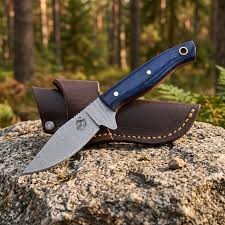

A collection of cowboy and Damascus knives can begin with a single purchase and gradually evolve into something deeply personal. Initially, the appeal might be simple: a unique blade catches the eye. Yet, over time, each new addition begins to connect with the existing collection.
That is when collecting becomes more than mere ownership.
It becomes an act of storytelling.
Cowboy Knives Can Represent Different Chapters
A collection of Western-style knives does not require every piece to look identical.
In fact, it is often the diversity that makes it compelling.
One cowboy knife might represent the traditional Western style. Another might showcase a more modern interpretation. A third might feature a completely different blade profile while still retaining that same overarching Western identity.
Each knife can represent a distinct interpretation of the same design culture.
This creates a collection that feels like a conversation between styles, rather than just a row of duplicates.
Damascus Knives Add Visual Variety
Damascus knives naturally offer their own unique kind of variety.
Because patterned steel can appear in a wide array of visual arrangements, adding several Damascus knives does not result in a sense of repetition.
A collection might include blades with dynamic patterns, subtle contrasts, precise and orderly geometry, or more organic aesthetics.
This makes Damascus knives particularly appealing to those who enjoy visual contrasts.
Two knives might fall into the same broad category yet convey vastly different impressions when displayed side by side.
The Story Behind a Knife Can Be More Meaningful Than Its Price
Collectors often remember where they found a knife, why they bought it, or what drew them to it.
These memories create an invisible history that accompanies the object.
One knife might be the very first Damascus blade a person ever purchased.
Another might be a gift. Another knife might be chosen because it introduces a Western style previously absent from the collection.
Monetary value does not tell the story.
It is the owner who tells it.
That is what gives a private collection its character.
Displaying Cowboy Knives Creates a Visual Narrative
A collection displayed on a wall or in a cabinet can create a visual sequence.
Varied shapes can create rhythm.
Distinct finishes can create contrast.
Diverse Western stylistic influences can make the collection feel like an exploration of the category, rather than merely a gathering of identical products.
Cowboy knives are ideally suited for this type of arrangement because their designs convey a strong theme, even though each knife possesses unique characteristics. The collection becomes a visual statement reflecting the owner’s interests.
Damascus Knives Can Spark Conversation
A stunning Damascus blade naturally invites questions.
People will notice the unique surface and want to know how the knife was made, why it looks different, or what distinguishes one pattern from another.
This makes a Damascus knife a valuable conversation starter.
The collector doesn’t need to initiate the conversation themselves.
The blade itself does the talking.
A distinctive object holds a unique appeal that sparks curiosity.
Keeping Records Adds a New Dimension
Collectors often remember details about their collection that aren’t visible to others.
The purchase date, maker information, materials, dimensions, customizations, or the reason behind the purchase can all be part of a personal record.
This can become deeply meaningful as the collection grows over the years.
These records transform individual purchases into a chronological story.
A knife bought at a specific time can later remind the owner of their life circumstances at that moment.
A Collection Doesn’t Have to Be Large
There is no requirement for a knife collection to consist of dozens of pieces.
A smaller collection can be just as meaningful.
Three carefully chosen cowboy-style knives might tell a deeper story than twenty unrelated products.
The same applies to Damascus knives.
What matters most is the relationship between the knives in the collection and the reasons behind their selection.
A collection becomes personal when the objects within it have context.
Why Similar Knives Can Feel Different
Two knives might share the same general style yet hold vastly different meanings for the owner.
One knife might be admired for its blade.
Another might be cherished for the moment it was purchased.
A third might have been chosen to complete a specific design theme. That kind of emotional context cannot be measured solely by technical specifications.
That is one reason why collectors continue to find new appeal in familiar categories.
Cowboy Knives and Damascus Knives Can Form a Distinctive Collection
Blending Western style with Damascus blades can create greater variety.
A collector might enjoy the cultural identity of a cowboy knife while simultaneously appreciating the visual aesthetics of Damascus steel.
The result is a collection that merges design traditions with intricate metalwork, without requiring every knife to follow the exact same formula.
This type of combination keeps the collection visually engaging.
There is always something different to appreciate.
A Collection Gains Value Over Time
The longer one owns a collection, the more personal the meaning of each item within it becomes.
These knives hold various memories.
A particular knife might remind its owner of the moment of purchase, a special gift, a new interest, or the very beginning of their collecting journey.
This is why collecting specialized knives can offer a unique sense of satisfaction.
The meaning of these objects is not static.
It evolves as the bond between the owner and the collection grows.
At KBS Knives Store, enthusiasts browsing for Cowboy-style or Damascus knives can find designs with unique character—pieces worthy of a personal collection rather than items simply tucked away in a drawer.
The most special collection is not necessarily the largest one.
The best collection is one where every item has a meaningful reason for being there.