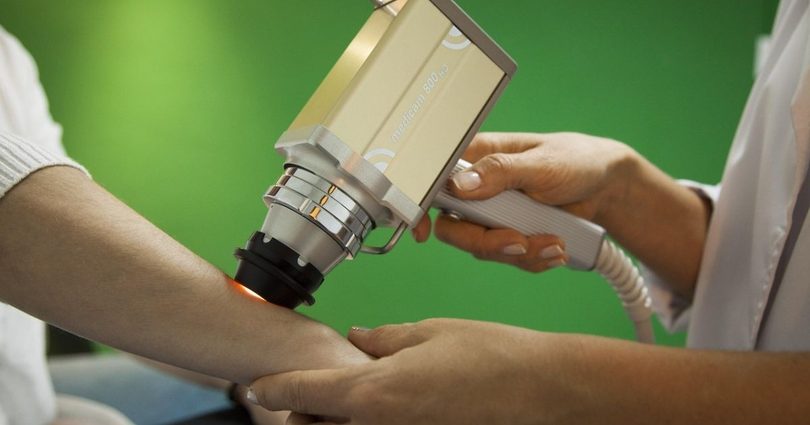

Medical UVB phototherapy is a type of light therapy prescribed by a dermatologist to treat chronic skin disorders, including psoriasis, eczema, and vitiligo. UVB phototherapy, also referred to as ultraviolet B light therapy, is a method used to treat various ailments by exposing the skin to safe doses of ultraviolet B radiation in a secure clinical setting. Treatment is very regimented and usually provided as narrowband UVB phototherapy, which is the safest and most effective option in contemporary dermatology practice.
UVB phototherapy has become a fundamental treatment in the dermatology unit, particularly when the patient is not responding to topical creams or needs a longer period to control symptoms. UVB phototherapy causes inflammation to decrease, abnormal skin cell growth to slow, and normal skin function to be restored.
In this article, we will discuss UVB phototherapy in detail, including its mechanism, clinical practice, advantages, side effects, and applications.
What is UVB Phototherapy?
UVB phototherapy is a type of ultraviolet light therapy that employs a specific spectrum of UVB radiation to treat inflammatory and immune-mediated skin disorders. UVB phototherapy is usually performed in a phototherapy cabinet, where the patient stands with the skin exposed to regulated ultraviolet light.
UVB phototherapy is aimed at regulating the skin’s immune response and decreasing the overproduction of skin cells and inflammation. Narrowband UVB phototherapy (311–312 nm) is the most widely used form due to its effectiveness and fewer side effects than broadband UVB.
How UVB Phototherapy Works
UVB phototherapy is a cellular therapy. UVB light is absorbed by the skin and affects DNA activity in skin cells. This process helps:
- Reduce the high rate of skin cell turnover.
- Inhibit excessive immune reactions in the skin.
- Minimise redness, scaling, and itching.
- Enhance pigment disorders, including vitiligo.
UVB phototherapy is believed to be a specific dermatological treatment modality that aims at restoring normalcy to abnormal skin cell behaviour.
Types of UVB Phototherapy
There are primarily two forms of UVB phototherapy:
Narrowband UVB Phototherapy
Narrowband UVB phototherapy involves a narrow spectrum of light of 311-312nm. It is the most advisable type because it is safer and more effective in the long term.
Broadband UVB Phototherapy
Broadband UVB phototherapy involves a broader range of UVB wavelengths. It is a less popular and more time-consuming older method that is not as popular today due to its longer exposure times and the risk of side effects.
Conditions Treated with UVB Phototherapy
UVB phototherapy is administered to various chronic skin diseases. The most widespread ones are:
Psoriasis
UVB phototherapy has a significant effect in treating psoriasis. It aids in the decrease of scaling, inflammation, and thickened skin plaques.
Eczema (Atopic Dermatitis)
UVB phototherapy is the therapy used in moderate to severe cases of eczema that cannot be treated topically.
Vitiligo
UVB phototherapy helps in repigmentation by promoting melanocyte functioning and enhancing the balance of skin tone.
Other Skin Conditions
UVB phototherapy can be applied in addition to:
- Lichen planus
- Cutaneous T-cell lymphoma
- Long-term itch (pruritus) disorders.
- Polymorphic light eruption
UVB Phototherapy Procedure
The UVB phototherapy process is well-monitored and carried out under a doctor’s prescription.
An average UVB phototherapy session consists of:
- This activity involves standing in a full-body phototherapy cabinet.
- Putting on protective eyewear to protect the eyes.
- Filling in sensitive areas where necessary.
- A regulation of UVB exposure in several minutes to a few seconds.
The frequency of treatment is normally two to three sessions a week, depending on the condition and response of the patients. The dosage of UVB phototherapy is slowly increased as time goes by to achieve safe skin adaptation.
The UVB phototherapy programmes are tailor-made for the skin type, severity of the condition and medical history.
Benefits of UVB Phototherapy
UVB phototherapy has several clinical and therapeutic advantages:
- Non-invasive treatment option
- Applicable to common skin diseases.
- Lessens reliance on systemic drugs.
- Helps in long-term remission in a number of cases.
- Combine with topical treatments.
- Narrowband UVB phototherapy is safer.
UVB phototherapy is commonly recognised as an effective second-line therapy, whereby standard creams and ointments are ineffective.
Risks and Side Effects of UVB Phototherapy
Even though UVB phototherapy is regarded as safe when used with proper supervision, there are side effects that can be experienced.
Short-term effects
- Redness of the skin, like a slight sunburn.
- Dry or itchy skin
- Temporary skin irritation
- Increased sensitivity to sunlight
Long-term considerations
- Excessive exposure to the skin ageing prematurely.
- Potential risk of skin damage with incorrect use
- Infrequent risk of chronic skin cancer in case of uncontrolled exposure.
These risks can be dramatically decreased with clinically managed UVB phototherapy, which involves dosing and monitoring.
UVB Phototherapy Safety and Monitoring
The UVB phototherapy is conducted under close clinical supervision. Careful attention is paid by the dermatology specialists to:
- Skin response to treatment
- Dose adjustments
- Frequency of sessions
- Patient tolerance
Patient safety during the treatment course is guaranteed by protective measures like the use of goggles and exposure time control.
UVB Phototherapy vs Other Light Treatments
The UVB phototherapy is not similar to other forms of light-based therapies like UVA or PUVA therapy. The preference of narrowband UVB phototherapy is based on:
- Better safety profile
- Shorter treatment sessions
- Fewer side effects
- More specific intervention on skin conditions.
In most dermatology centres, UVB phototherapy is the treatment of first choice used in cases of chronic inflammatory skin diseases.
Who is Suitable for UVB Phototherapy?
UVB phototherapy can be used with most patients, particularly with:
- Moving from moderate to severe psoriasis.
- Chronic eczema
- Widespread vitiligo
- Unresponsive to topical therapies.
Nevertheless, it might not be appropriate in persons with some medical conditions or those who are sensitive to ultraviolet light. Before UVB phototherapy, a dermatologist should be evaluated.
Conclusion
UVB phototherapy is a clinically established, widely used dermatological therapy for chronic skin diseases. Phototherapy, particularly UVB phototherapy, is a controlled, effective method of managing psoriasis, eczema and vitiligo by regulating skin cell activity and minimising inflammation.
UVB phototherapy is believed to be a safe, structured, and effective long-term treatment that improves skin condition and quality of life in patients with persistent dermatological disorders, with proper supervision.